Posts
by n splendorr
July 24, 2019

The Promising Child

The promising child had vanished, but the city had not yet burned. Menacing movements in increasing shadows fought for her attention. From high above the common grounds; from higher still than all its walls; from an ancient-sculpted balcony, the princess looked out over Hyrule and made plans under the milk-blue moon.

Zelda remembered what it was like to sit peaceful, enthusiastic, studying or reading or talking happily with friends. For the life of her, she couldn't access it now, any more than she could see the friends her adoptive captor had vanished. How many years can pass without access to that contented mode? Was this adulthood, come too soon from the sky, never to release its grip? Or was it simple imprisonment, with only a key required to sever the lock from his shoulders and set right the world?

Time enough had passed. The sword was gone, the temple emptied, the great tree sagged and silent. Nearly five years. The boy wasn't coming back, nor her father, nor any other promise-making man. There were no promises left in the world, nor hope, nor especially any remnant of romance. A tyrant sat on a reupholstered throne, broadcasting violent triangular waves until her citizens, her charges, saw through violent miscolored eyes and staggered through the streets haunting those who still held onto humanity. Time enough had passed.

So she'd found Impa's dead religion's ceremonial clothes and watchful blade. Snuck together a mismatch of knives and honed them throwable. Channeled secret shreds of hot magic into lynel-eye marbles. Gathered handfuls of combustible tree nuts during her daily walks. Extended the dance lessons of her distant childhood into acrobatic rituals of martial preparation.

Princess Zelda had no more options; she was a goldfish figurehead, kept on display but now largely ignored. If she was ever spotted outside her bowl, she was returned swiftly by beast-twisted hands. Zelda couldn't act, so she would have to be someone else. And she would have to break the hands of any beast or man who brought harm to her beloved people.

She pulled up her boots, cinched tight her wrist wraps and binder, and raised the mask over her mouth. If Zelda must wait hopelessly at home, then another name would do what she could not. The streets would know a new shadow. Old symbols would drive back new horrors. Hyrule was out of time, but Sheik was just getting started.

[It's extremely stupid that I write fanfiction in an overwrought voice. This was supposed to set the stage for a game about Zelda/Sheik in the years after young Link is frozen in time; playing on the Batman concept, Sheik would roam the streets of a vast Hyrule, saving people from Ganon's monsters, restoring hope and making room for life. There may or may not be portions where you play as Zelda during the day, gathering resources and holding quiet court beside the tyrant Ganon, listening in his plans and the pleas he ignores to plan her next missions. I would prefer it not conclude with Link's return; this is yet another branching timeline. I think she would ultimately venture out of the city, rescuing Ruto from under the ice and maybe meeting other characters from Ocarina, and then she'd defeat Ganon. When Link emerges from the Temple of Time, he finds Zelda on the throne. Maybe she tenderly apologizes for the loss of his youth, but then she definitely breaks the Master Sword and Ocarina so that there's no chance of time travel being used to undo her work or restore Ganon to power.

Also in my dream game, Hyrule would be warped by Ganon's misuse of the Triforce of Power into a vertically-stretched, Bloodbornesque city of varyingly-mutated Hylians. His power is turning normal people into monsters, including the city itself.

Anyway! An Arkham City-style game with Sheik as Batman would rule! I should probably just write more plainly about these things.]

July 23, 2019

By the sea

When will I meet the mysterious benefactor who will let me live in their spare room by the sea for 6 months while I read some books and look at birds

July 23, 2019

Hussalonia Feels Bad


I listened to this new 4-song EP by all-time great band Hussalonia as I forced myself to go for a jog in the hopes that a new set of endorphins would override the crushing sense of uselessness and futility I feel toward my place in the world, and wouldn't you know these songs are about that very same thing. Not my favorite Hussalonia tracks musically, but I really appreciate the clarity of the lyrics in the last few Hussalonia releases. I have felt — and currently feel — a lot of what's in these songs, and it's nice/helpful/consoling to hear someone sing them.

July 22, 2019

Contents Under Pressure

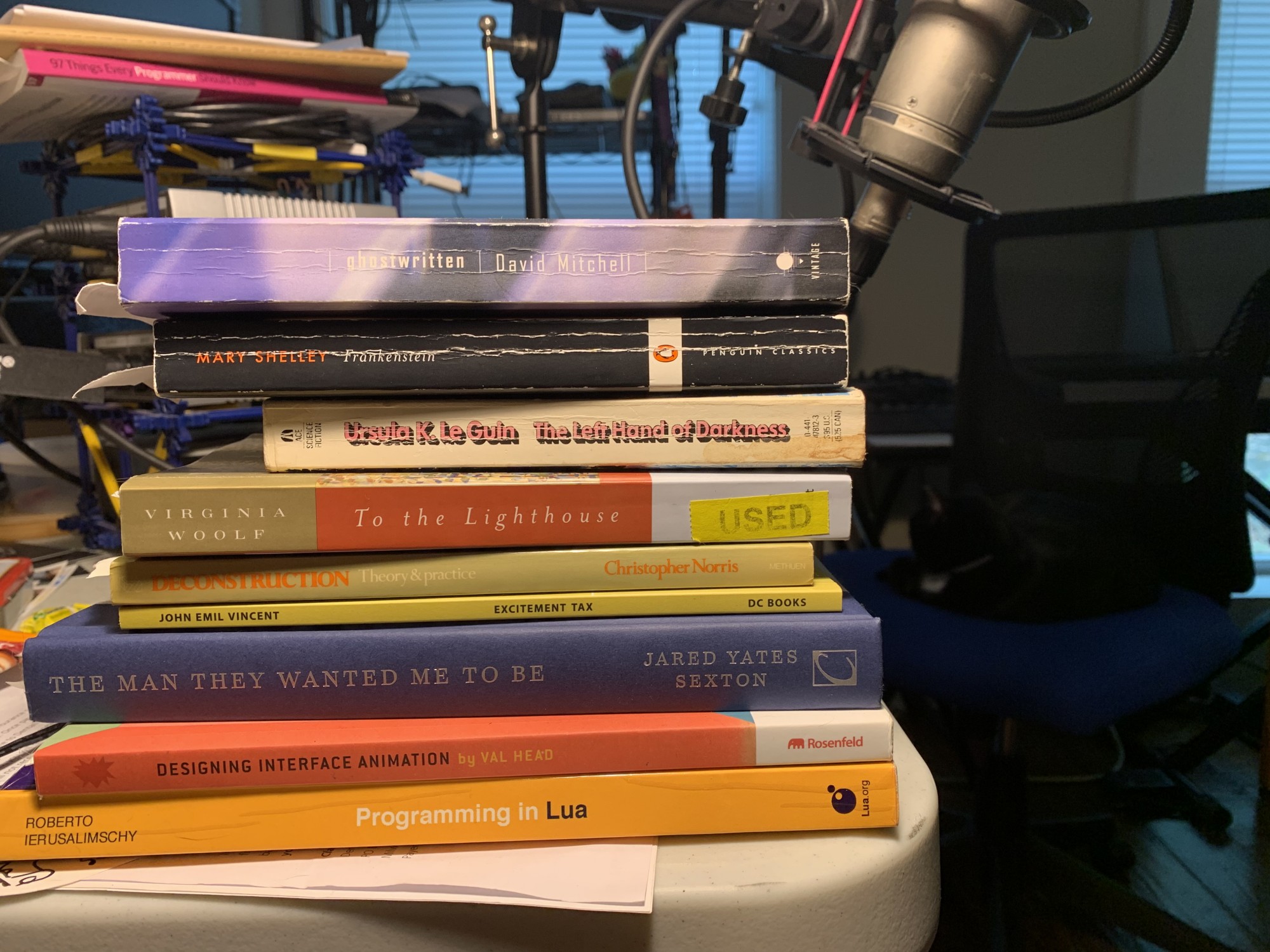
Walking out my door, I notice I’ve accrued sedimentary layers of recent reading on the edge of my desk. I’ve recovered some of my drive to read this year. Each of these books is partially inside me now; I haven’t finished any of them, and they aren’t the only books I’ve let inhabit me in recent months. Everything stews together.

Also pictured: the cat who loves my work chair much more than I do.

July 22, 2019

I made a Kirby 3 Plugin to replace the image kirbytag and automatically re-encode images

This site is built with Kirby 3, which is a really good and relatively-simple flat-file CMS that I use a lot. I ran into an issue where images uploaded from iOS can display with the wrong rotation in non-iPhone browsers. It's not Kirby's fault, but Kirby also doesn't have an easy way to address this with its built-in tags. So I made a custom Kirbytag for displaying images that re-encodes all images before displaying them, which fixes the orientation issue. This uses Kirby's built-in thumbnail processor, so it doesn't require installing anything else. And as a side benefit, I can specify a maximum image width and shrink images down before sending them to the browser, which saves everybody bandwidth! Yeahhhhhhh

If this is of any interest to you, here's the Github repo!

July 21, 2019

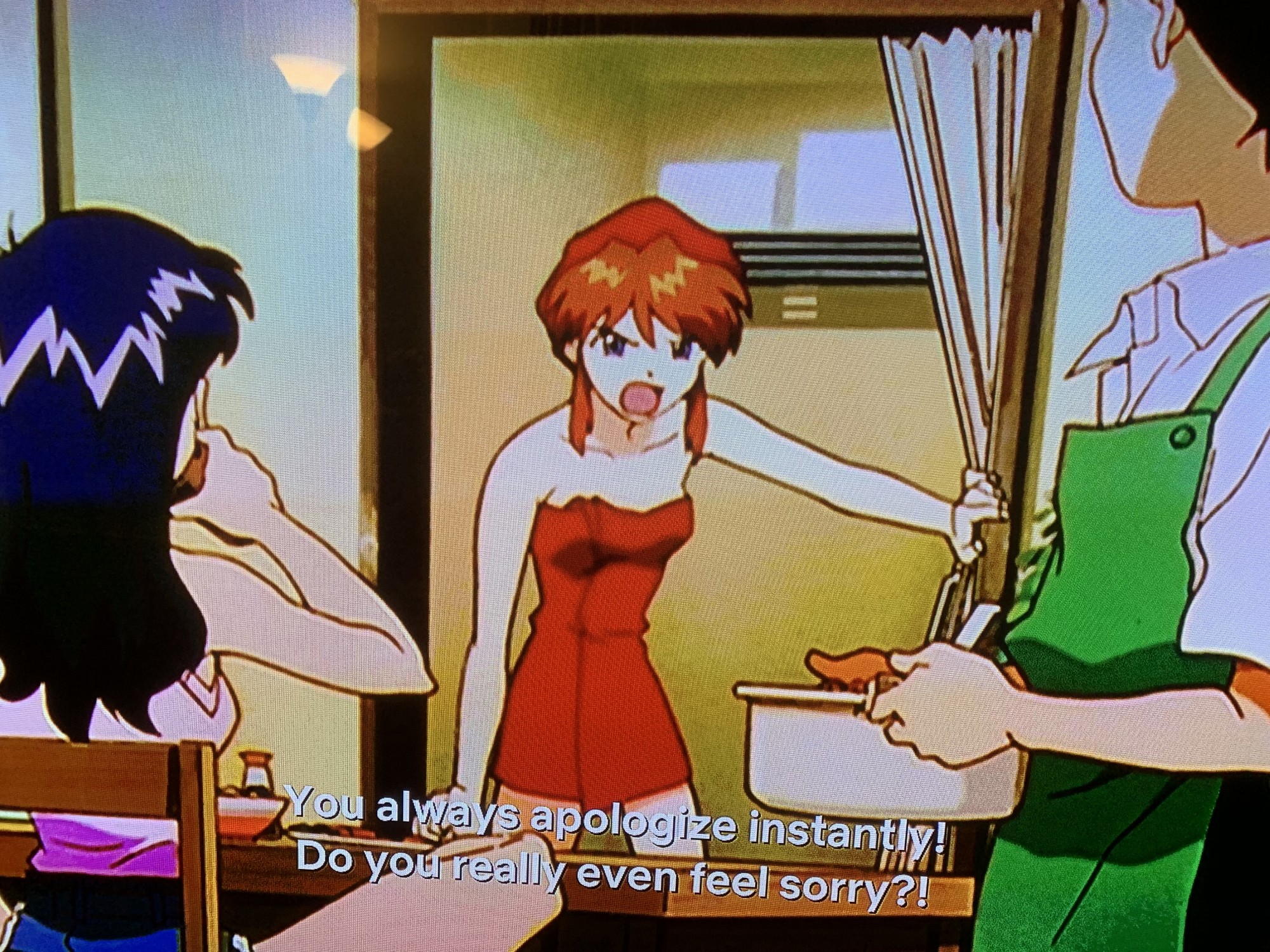
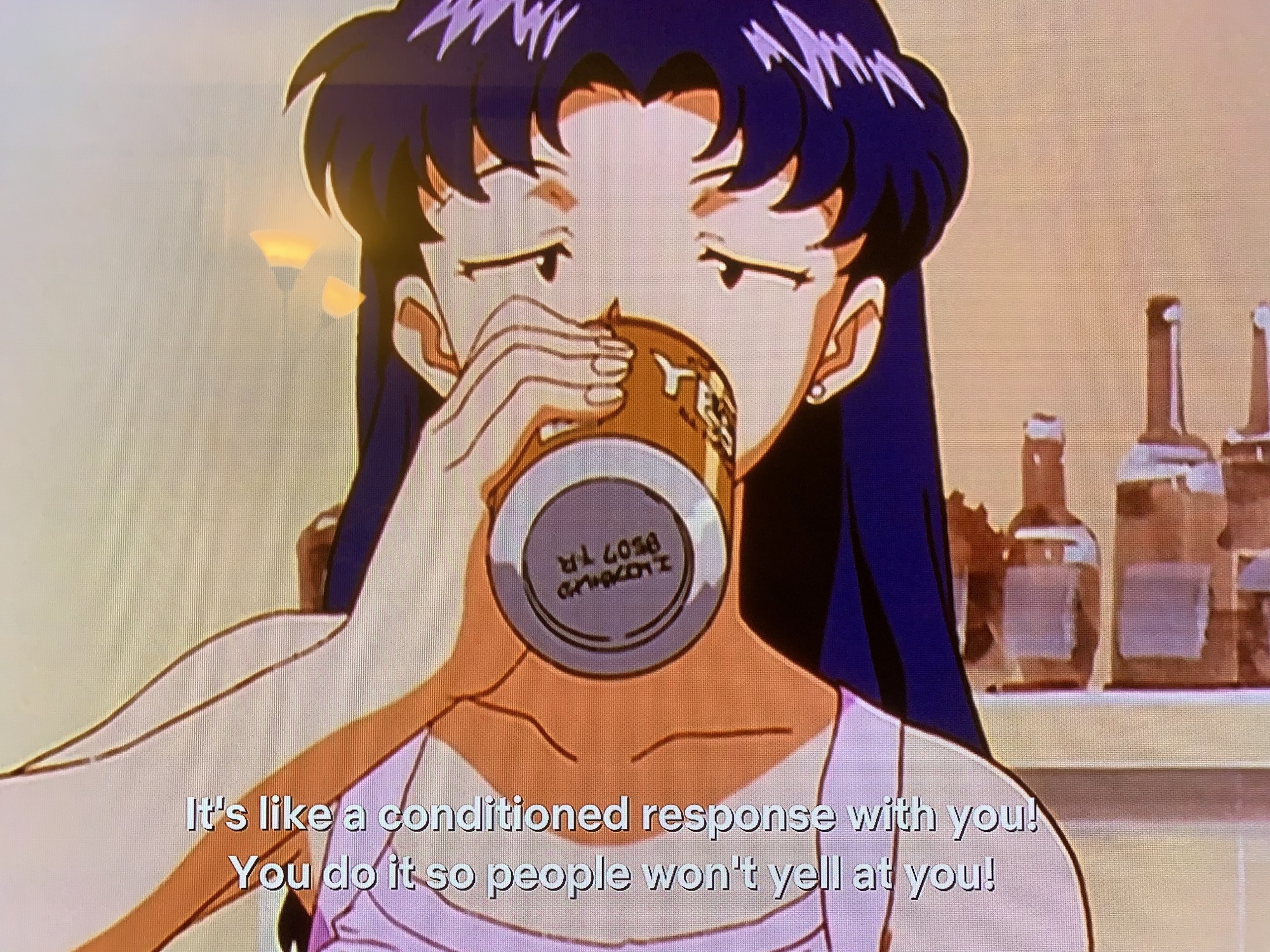
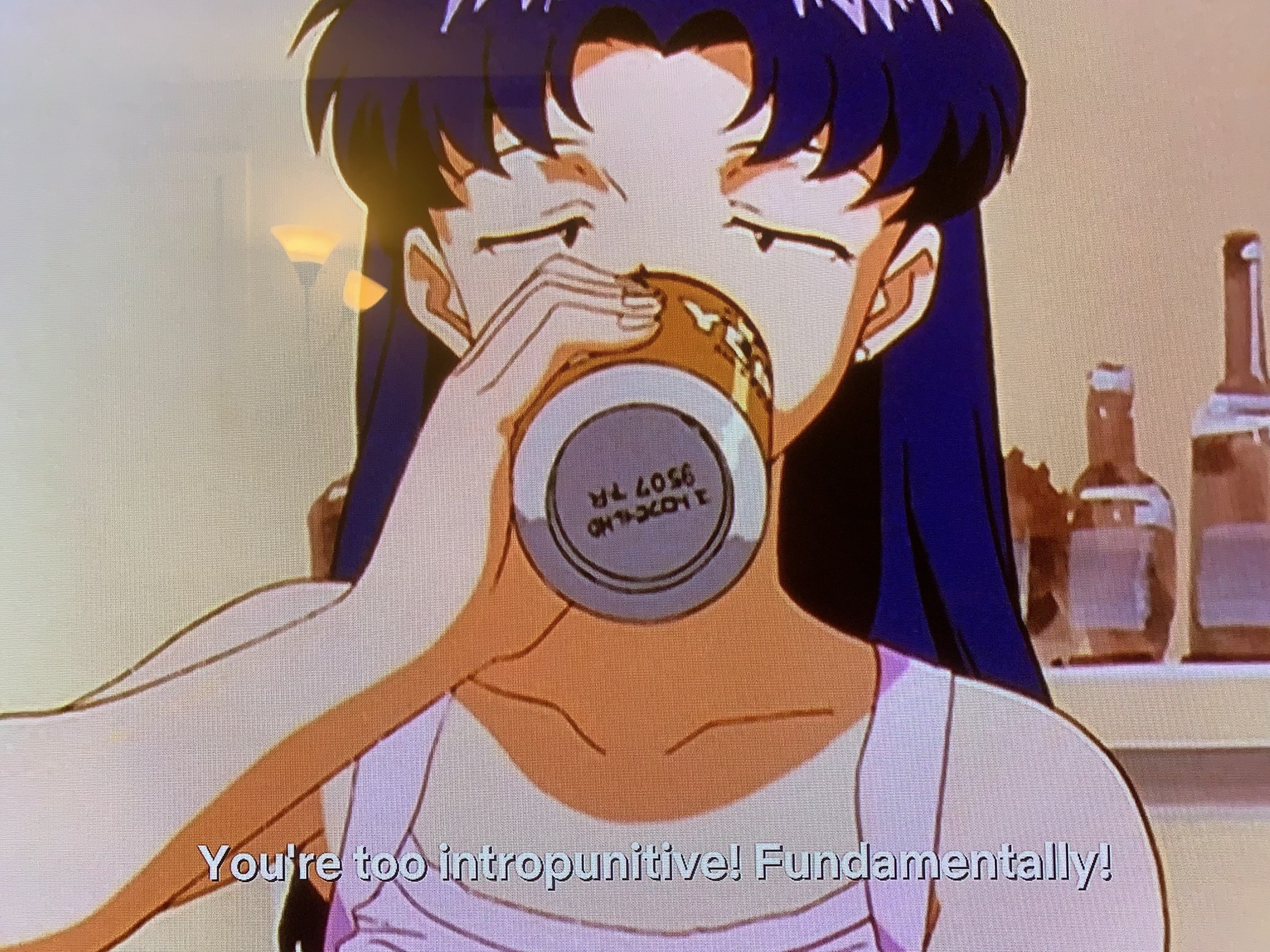
Too Intropunitive! Fundamentally!

July 20, 2019

The Hole World Fragment 1: Honey Hunter

[In late 2013 and early 2014, I wrote a lot of pieces and notes for a story I called The Hole World, though I figured I'd come up with another name for it later. It was going to be a grand, strange fantasy about a world with a hole in its center, a pillar of sun stretching out of it into infinity, with the land stretching out flatly in every direction. Biomes ringed outward, with the molten core of the planet inhabited by people who gathered metals flung out constantly by the sun-column, more-temperate regions farther out, and then frigid expanses stretching out beyond.

I planned to tell a story set in this world that would use several voices, including an explorer of the frozen reaches, a janitor in a building-sized light battery, a Rumi-style poet-priest of a columnal solar religion, a member of a roving band of weavers who knit bandages across the chasms of the fracturing world, and an indebted miner who had to drop down into the infinite, scorching hole at the center of the world every day to harvest metal. This is a piece exploring the voice and opening scene of the miner's story.

I have a really long document of fragments and notes for what the story would be, and I still think about this story more than is healthy. Again, I don't require you to read all the stuff I'm posting right now. I just want to put some of these things in places other than my hard drive, both for the possibility that someone might enjoy them, or that I might somehow feel like they're more real if they exist somewhat publicly, or maybe just... whatever it is that happens when you concretize your dreams a bit, even insufficiently.

This starts out deep in a possible vernacular for the people who live brief, sweaty lives scarred by sun-hot metal. It's all just phonetic, sort of southern US meets UK urchin. As it goes on, the language settles down as I tried to make it more readable and also to move more quickly through actually getting a draft of the story out. I don't believe so much anymore in being this aggressively hard to read out of the gate; but here it is. I'm not editing; I'm opening the cages on these dear, regretful creatures and setting them free.]

Isle 1: Honey Hunter

I went to work wondering, and dreaming dragged me into the Tore.

In there you can't see barely nothing for the clouds of wicked hot airything just hissin and screamin by. And I mean airything. Of course you got your dang rivers and rivulets pourin off the surface and explodin immoderately into vicious hot steam, so's like it looks a river dips down into nothing, and then curves back up into the even more nothing, flowin up and spreadin into white steam blankets. Durin the swell, that is. Come taper, the heat's a bit less intense, so the river's dive degrades more gracely into an elegant diffusin of fog. That's still a freak sight hotter than any water you'd ever wish to dunk in, but we could picknit the finer points of the Pucker's incessance until the last fadin light.

Innyway, you wanna know about the first day a fall, so sure, Isle tellit.

Burr en Isle set out from early-taper, when the rest the world's off sleepin, but round the Pucker we got work to do finely. Plenty light this close, less lively and dim-silvery, in its weird way you well know. See we got all our searanti on, then all our pickets, and alla rest the gear.

You all right? Sweatin perdictably, for one a your tint. Perdon my frontry. Well, yeah, sip it steady but don overdoit. Helps hold the heat tollrably, yeah? Yeah, Isle go on.

So with airything comfbly situated on the draggon, we draw stalks to see who does the haulin. Yeah, Burr'd throw his eyes at me now, but we got an insistence on tradition, even on those that irk. —Could just take turns, you might could say. But then Isle say, —Sure, but then what's Fate got the do allswell along? Just sit onner wrists ehn bumwaver? Not likely, Isle say. She'll find a way to get involved, you well know. We'll like to giver a mini something, then sender onner way. Even brustratin relatives got their place the table.

So I draw odd stalks first, so Burr laughs cause Isle be doin the haulin. Consolation is, though you try en ignore it at the moment is, he who does the haulin don't descend. Least not first, en that's a consolation cause the first drop's usually longest en arduoust. Yeah, time's short but we gotta fill them pickets a certain quoter, en we all know the quoter en how not to lie, cause lyin's obvious enough come sortin.

By time we get to the edge, it's the calmest center of the taper. Least amount of metam blowin out of the deep. The Bore swells, heat rises, en more precious nonsense condenses outta the mist. The rivers bend higher, en we feel the pressure grow.

En it's a given take, you well know. You do more scrapin' toward the start, which is safer but more work. Then as the shift wears on, the metam sweat-drops dewin all over your backside get more en more. You don't wanna get heavy down in the hole. But you're dewin up most the wrong stuff, just inny old whatever sticks to you, slag. Good scrapers have a developed discernin. It's what keeps you fed en livin en climbin out again.

Hehn? Neah, we don just leave alla gear round the Pucker, cause of the scourgin heat. Our sistereeds can buck en distort through heatwinds a fair reasonable sight more en most mats Isle ever laid eggs on. But leavem out a full swell, en even the juiciest rigid reed is reduced to a creepy, dusty wiggle sheath. Why would we live in the shadow the peaks, en walk all that dang way draggin all those achillegrams of reeds en ropes? Cause we like it?

Isle choose to tuck your condescendin inna this mini picket here, en just play pretend it never was.

Innyways, where was it? Oh, yeah, Isle was haulin the draggon, which is like this big blanket a reeds we stack airything on, en... yeah yeah, you've seen em; no need now I'm the nugget. Fair sight. Burr got to trot alongwise with only his reglar load. We chatter here en then, bits a bits, you well know. What you got to say to somebuddy you work with, risk your life by turns, each after each? Not much, but always some, hecklin and miseratin mostly. Stuff our mouths with a tar of nonsense words, maybe to keep from just gaspin and givin up, some days.

Things you miss, though you barely recognate them when.

{>> @EDK DICTION: Also, I'm absolutely sure this is too thick and especially inconsistent for final consumption. But I'm enjoying thinking it through, and the voice is right. I could see it perhaps needing to be tempered with cleaner third-person, or just smoothed out so there are fewer new words per paragraph. <<}

Through the cittle, down the main fare a sistereed huts en hovels, and the casional metam-forced or even full-metam cast structures, where the rich store and formulate their wealth. The enormous pours, the huge cups that hold heat and transform metam bits inna bars. Sift different heats of metam from one inother. We're just one pair a scrapers among the hundreds. Airybody linin out toward our work sets. Leavin plenty room between us as usual; respect the livin, respect the maybe dead. Neah, we don get too persnable with other scrapers. Most are hard men en women. Most won't last long enough to get known.

Already as we set out I was driftin and floatin through figments and wondrins. I'd been scrapin out that fleckin hole for almost a year, in the process of payin off my inevitable debts to kin and country. Yeah, I played it safer en most. Burr en Isle made a right team, cause he climbed wilder and deeper, en I played it closer but thorough. Both our lives were basically already at their close, but even when you're swingin on a lattice of reed fibers in the skin-boilin center of the bored-out world — and that's your job you do — most find they still aren't willin to just give it up and drop.

Though some do.

And that's what Isle was flectin on, mostly. That drop, inna the Tear. That massive swelterin endlessness, the drop into whatever lies past bottomless. To be truly consumed by our work. Many are; many scrapers, dozens a year at least, by one fault or another go down in, en don't come back out. Just leave their cursin partner to drag the reed ropes back outta the hole to the cittle. Then to explain and curse the absence, and curse further the missed quotas.

The bosses cut slack outta sympathy? Neah; they cut slack, but outta... what choice do they have? And not like the fleckers aren't sittin' on hoards of barred metam innyway, en all this toil en suffrin aren't just stuffin the coffers against futures and flukes. Yeah, I know, not my place, and drop me for sayin it. The difference it makes is subtle, but there.

Why'd people drop? Outta carelessness? Pressure waves? Weather flukes? Statisticality? Or just finely givin up? All a the above, leadin to all who've gone below. You get buffeted around down there, constantly, by the rips of wind and heat. Even mid-taper, at its calmest, the Bore is still almighty hot, and there are weird winds that come up from below, like carried along from where maybe it's hotter down somewhere, and pushin up at us.

So we'd been walkin a while, trudgin along the path between two a the Pucker's peaks, en Burr asks me if I'm feelin airight. Parently Isle was bein real quiet, unusually so. Realize a been lettin my thoughts take the leash, which is a good way a gettin dead this close to the Tear. Yet Isle'd drifted. The gravel's all kinda colors, when you kick en scrape a foot along it, cause of what all's thrown out the Tore. It all kinda settles into gray somehow on the top, but when Isle looked back, there was thin varicolored lines stretchin out behind the draggon, lighter shifted outlines of Burr's feet, and deeper bright gouges where I'd been diggin in my heels a might harder than usual.

I can see that when I think it over, real clearly.

Burr en Isle push our way through the thicknin air, and make our reproach a the edge. Prior to the edge, alla other hunters fan out along the width, followin a loose higher archie a seniority, for how far ya gotta go to stake in. There's markers left by some hunters along the way, but we don bother. The map shifts so fast, with outcrops movin meters some days, compressin en slidin around from the force a the Bore's breath.

Isle stood and squint-stared at it for a minute while Burr started unpackin. Below en beyond the ragged, drop-strewn edge a the Tear, there it was. A fact as old as anything, the pulsin center of the wirld, our life and our livelihood. And a fleckin terrifyin sight, airytime.

It's one thing a see the Bore in its common place, at the horizin. Sorta comftin there, a sorta fixed beam holdin the world together. The way most people ever see it, at a safe distance. Isle's heard some even have some kind of religion about it, which is understandble. If you've never seen it up close. Even further away, where the ground's not so bullied by it, where the air's not screamin en heavin en spittin hot flecks, you could magine it jes bein simple, the thing tellin you whether to be asleep or awake.

Here, that's not possble, you well know. Here, specially when you get up a the edge, en you see how it don start innywhere, that it's not holdin on to the wirld. The Bore's not holdin on ta innything. It's breathin out there, incredibly bright, an impossble feelin distance, but so far. En the distance atween Isle en the Bore, that's no distance at all compared a the no-bottom stretch down en up. Ventually, it jes stretch up so high it dwindles to a needlepoint en then nothing. So but you know it goes up even farrer than that, en that it's jes your eyes that can't go inny further. En lookin down, the same, but inna the funnel-lookin sheer sides, peekin innen out from the clouds a metam en fog.

A poundin pillar a light en heat, achillemeters across, in the dead center a the Tear which is itself hundreds a times wider. Jes this huge gapin hole in the middle a the wirld, swirlin full a hot melted air, en even when it dims, it's still so bright you can't look straight at it.

How could you take it for granid?

How could you take it at all?

July 20, 2019

In Tsunami Grass and the Moon in Shadow

[Here's a short piece from some number of years ago. I've tried on many voices over the years, and hardly ever sought feedback to see which voice was mine. I really like writing things like this, even as I hear dry choruses of hisses about being overwrought and unapproachable. In another life, I think I could have enjoyed writing the flavor text for Magic cards.]

The Dragon King sits draped in staves and rods, in tsunami grass and the moon in shadow.

Immediately: Correct your heresy: The overgrown British lizard you see before you, and which I can read in your seeing. His Roarship is not the false-god greed-beast of common parlor games and CGI-spectacle flame breath; He is of the lineage of River and Sky, the Dragons barely-visible, only ineptly described by that word "Dragon" and its overtime dilution. His is a wordless dominance, and it is only we who must struggle to speak of Him in the approximate. Neither is "King" sufficient; He is one who reigns not over some human domain of land or exploited serfs, nor over locked rooms of misbegotten metals. His is the breath of all trees. His is the beard of the wooliest lion. His are the robes of every silkworm's wettest dream, his belt the envy of the nineteen planets.

The Dragon King cradles in crossed arms a sword which cannot be forged or faked, on a heat-lightning seat of greenleaf curve, a contemplative cut-free head in his lap.

What does a Dragon King consider in his bended night? From one angle does his crepe paper mane give a vision of Dante's devil, and yet from another the impression of one child's best cotton friend?

Pyramids of possibility drift in and out of view. A cycle of old forest growth is brief-eaten by flames, speed-grown from complete char, to seedpod infancy, into even thicker twists. The face of the beheaded is turned toward Him, and we will never know its gaze.

What does this Dragon King desire, when He can feed and be full on mere stray wisps of any creature's emanated need? The heat of love either matched or unengaged; the hot-tar waver of any cricket's plaintive lust-hunger warble. When the plain rush of a certain crossbreeze meets His unlanguaged requirements completely? What use is a separate human head to His Mawjesty, and what ethic or anger made its separation sure?

One can count on the head of an imagined enemy as a favor-seeking gore prize from some dumb village cretin. That humans often and with pleasure think the death of another will improve their wicked lot. What use is a bloodless noggin to the vigorous nowness of the Dragon King, and why would He tolerate or reflect upon such a tasteless gift at all?

These are just some of the questions that wither before the Dragon King's whorled attention on this graphite-glossy, monochrome-lunelit, regret-stained night.

July 20, 2019

"How am I not myself?"

July 20, 2019

An Origin of Species

(I wrote this free verse(?!) fanfic over a couple weekends in the summer of 2012, after being sorely disappointed by the Alien prequel Prometheus. The film's early ads focused heavily on the android David, including some really evocative ads about how he was created. I read into some details and got very excited about what the movie might do, and rewatched all of the Alien films in anticipation. Then I was deeply frustrated by Prometheus itself. I wanted to tell a better version of the story, more in line with the politics I saw in the original movie.

But of course, this was 2012, and I was a solitary, sad young man with high art aspirations and a tendency to make art that was unwelcoming. So, rather than just write a straightforward fix fic, I wrote a free verse diary of David's creator, interwoven with quotes from Jacques Derrida's Dissemination about aliens, fathers, and Plato's pharmakon that I was really surprised to stumble on at the very moment I was thinking about this story. I linked the creative act of writing with making a child, and mixed in my own ambivalence about both. I also wanted to talk about the bullshit of masculinity. I had a lot of fun doing this for a bit, and then I got frustrated with myself for spending too much time on something I thought no one else would ever enjoy. So I trailed off at the end, and then left it untouched for seven years.

I don't think this is my best work. I haven't edited this at all, nor have I attempted to finish it yet. That's not what I need right now. It's a first draft written in a few sessions. If I were to edit now, I'd probably take out all the line breaks, find a more natural way to mix in some of the quotes (or, hell, maybe I'd leave them because I still think they work), and definitely rewrite most of it. I also hadn't read Frankenstein yet, and if I had, I would have done it differently, or maybe not at all! But I need to purge my list of regrets, and this is one of many creative projects that still lingers in my guilt ducts. I hereby release it, and if there's ever a good reason to clean it up, I'll give it another look then.)

Please forgive the deep pretension of a lonely dude in his mid-twenties. Don't read it as poetry; just read it like sentences! If you hate the academic quotes, just skip them. And have fun!

Content warnings: Bad fathers, vague allusions to the sexual violence implicit in the Alien series, though I tried not to talk about it much!

0.

"Thus, even though writing is external to (internal) memory,
even though hypomnesia is
not in itself memory, it
affects memory and hypnotizes it in its very inside.

That is the effect of this pharmakon.
If it were purely external, writing would leave the
intimacy or integrity [of psychic memory]
untouched.
And yet,
just as Rousseau and Saussure will do
in response to the same necessity,
yet without discovering other relations
between the intimate and the alien, Plato maintains
both the exteriority of writing and its
power of maleficent penetration,
its ability to infect or affect what lies deepest inside.

The pharmakon is that dangerous supplement
that breaks into the very thing that
would have liked to do without it
yet lets itself at once be breached,
roughed up, fulfilled, and replaced,
completed by the very trace through which the present
increases itself in the
act of disappearing."

"— with respect to speech, nature,
intercourse, and living memory —
at once something secondary, external, and compensatory,
and something that substitutes, violates, and usurps."

— Jacques Derrida, Dissemination, p. 110

After we laughed, we became serious. I said to Marguerite: "The question is, have men died today because they have tampered with the sources of life, or do they tamper with the sources of life because they are dead and wish to find its springs again, to create an artificial control of the sources of life?

— Anaïs Nin, Diary, Vol 1 p. 197

1.

One problem was a man bent on creating life,
on continuing his legacy
(obsessed with the idea that legacy is everything
to the exclusion of the living it legitimizes)
by making a break with what came before.
Life with no predecessor but the idea of life.
That if something breathes, bleeds, and breeds,
it is Life,
and that if it also
dances and divines, cogitates and conquers,
then it is Human,
whether it was born or built. Whether it was
mothered by gentle arms, language absorbed
along the spectrum of gentle coo, on up to square roots,
from politeness given reason by example
to politics justified by the rationality of experience;
or if it was imbued with a collective scraped gestalt knowledge,
pumped full of fluids containing nucleic storage media;
its DNA containing not only the structure of its own shape,
but additional strands holding Constitutions and concordances,
the texts of entire infinite libraries, with further knowledge ingested
with each sip of the milk of its endless infancy.

Birthed suddenly, fully-formed as an adult,
from a warm sac full of piping and wires.
No single earth-maternal-centering umbilical, but
the abrupt system-wide termination of
thousands of sensors, feeders, and calibrating wires
radiating bodily from its entire frame.
From "his" frame.
His body.
My son.

...

2.

"He is thus
the father's other,
the father,
and
the subversive movement of his replacement.
The god of writing
is at once his father, his son, and himself.
He cannot be assigned a fixed spot in the
play of differences.
Sly, slippery, and masked,
an intriguer and a card,
like Hermes,
he is neither king nor jack, but rather
a sort of joker, a
floating signifier,
a wild card,
one who puts play into play."

Dissemination, p. 93

3.

What is the blood of the created man?
One of our earliest questions.
The vector for storing and moving
both energy and information
need not inherently mimic the blood of born man.
This was an initial breakthrough,
but what we broke was much more complicated than
a simple technical barrier, or once-proud bull;
we emulated the heartache of blood's purpose
while stealing from it the fundament of its cause.
We delighted in removing the iron from this new man.
A laugh, to subvert from the earliest stages of development
the assumptions about androids, robots, and all of man's greatest creations.
Not an iron-clad man of unfeeling, nonyielding metal;
Leave that to the shells of transport and construction.
Our man must be soft, durable but pliable,
Capitalizing on the principles of ductility as survivability.

From without, he would be indistinguishable from birthed man.
Warm, giving, the skin a layer added in construction to cover
the powerful vigorous frame.

See him floating in the womb of tubes,
Obscured by the milky fluid of his life.

Also from the start, we knew we could speed his growth
by creating a womb of optimal conditions,
but that he should be a self-assembler, following the pattern of life's
own internally-logical construction.
The plans embedded in the DNA we had thoroughly perverse-engineered,
integrating pieces from species throughout nature's experiments.
Expanding on the precedents.
Chimps over 99% identical to humans;
Daffodils sharing 50% of the same basic information.
All creatures on earth starting from common origins
meant that with enough knowledge,
enough trial and
plenty of error,
we could use pieces of earth's forms to include
faster gestation,
higher photosynthetic response to effect solar metabolization,
greater adaptability to environment,
stronger resilience to physical harm by way of internal weaponry,
other methods of reproduction depending upon necessity,
a self-propagating voyager who shared in community
but did not require it.

We would build a man who could traverse the stars
without fear
of decompression,
without dreading the unknown organisms we were sure
already populated the cosmos;
constructed to be immune to microorganisms
by scourging all infiltrators with hot automatic vengeance.
The human's great weakness was its reliance on
the multiplicity of organisms that constitute it;
from the piles of festering bacteria necessary for digestion,
down to the notion of incorporated organs, each its own
long-lost original animal, subsumed and
subservient to the swallowing king, Body.

This man would be all sinew and tubing,
all structure and efficiency,
all pressure and simplicity.
Functional differentials, yes, but no dependence on the whole.
A head alone could live on, self-contained,
so long as it maintained access to light and its component minerals.
Those, we chose from the most common rocks and gases in the universe;
distilled easily in most environments to a concentrated health potion,
the milk of the universe-mother.
It was simple enough to enable him to scavenge,
to dissolve stones and girders,
to soak up and filter from any traversable medium
the basic atoms of his existence,
and we would let the rapid carpenters of RNA
take care of the rest.

Of course, he wouldn't need much.
Not much to sustain himself.
Like his father, he would be a man of simple needs and pleasures.
But life is a process of goriest digestion,
of consumption and destruction
as the glorious route to
intellect, art, and
adventure.

And like all life, we knew he must evolve.
How best to accomplish this?
In this there were two camps within our patri dish.
Some advocated our rapid prototyping and shaping,
generation after flashing generation,
allowing variations to arise of their own
— of his own —
accord, but then keeping in mind our vision,
which must be true, and which yes could accommodate
details we never anticipated, but had in its end
a resilient man who would usher in a new
era of men?

Considering now, how much of our trouble was that we set out to
make, specifically,
a man?

4.

The other, simultaneously-pursued path was one of
rampant and, in my educated opinion, of wanton randomization.
We had made a creature capable of building itself, of
selecting traits as it grew based on viability,
of writing and re-writing its own blueprints within a single
life's span,
(with the entirety of earth's myriad genetics available for reference,
traits and appendages of all species readied for possible use
by the sons of my son,
for though he was a man, he would be the
son also of earth, in its entirety, and
while we idolized the form of man, we also
recognized that earth's greatest child
might eventually become something other and more,
the more we wished we were but could never be);
and we were pleased with our early results,
these campers insisted,
so why not entrust the mechanisms we had devised to make their
own choices about their future?

We had not come far enough yet, in my opinion.
The child was not yet of age, and needed our guidance.
But it was a scientifically valid point,
a possibility worth investigating,
and given the controlled environments and strenuous
checks on security we had put in place to secure
our palace of progeneration,
I allowed it.

And slowly I came to see the power of evolution accelerated.
How Yahweh must have felt,
at His cosmic sense of time,
seeing Earth herself writhe with fire and then with worms,
having cast His seed into her seas
to see what yet might be.
The children He never could have dreamt.
How they roiled forward.
Some horrible, some gorgeous, some surely
redefining aesthetic assessment entirely with their curves and teeth.
Teeth, at all, as an emergent concept!

What would the toothless God make of
His first fanged mutant child?
Acceptance and horror's fascination entwined.

How many of them we grew, observed, and
threw away.
Cast into clouds of dissonating vapors.
We grew callous of necessity,
killing our messes to make way for our heirs,
but we loved, and love still.

5.

"For it goes without saying
that the god of writing must also be the god of death.
We should not forget that,
in the Phaedrus, another thing held against the invention
of the pharmakon is that it
substitutes the breathless sign for the
living voice,
claims to do without the father
(who is both living and life-giving)
of logos, and can no more
answer for itself than a sculpture or
inanimate painting, etc."

Dissemination, p. 91

6.

I was aware of the company's other arms,
of humanity's movement into the stars,
in the way one follows the progress of foreign wars.
Blips of data, a sense of eventual consequence
that rarely results in any need for personal action.
Expansion across the galaxy just meant readier access to materials.
Though perhaps....
Near-infinite cheap power simplified our division's budget
and amplified our investigations.
But what if...?
The company cared for us; it was the larger womb gestating our project.
In my private leisure time, I mostly returned to the classic films
of yesterday, those mythical lumescent figures on whom
my son would be fed, modeled, and educated.
Studied the men of my youth.
The men I wished I'd been.
Who could have been,
Of whom one might have been,
if my mother could be believed,
my own forever unmet father.

We hardcoded a "tendency toward humanity."
A genetic preferential, akin to the innate
tendency toward survival
and the inevitability of caloric combustion.
No matter the turns his genes would take,
he would always prefer to hold the shape of humanity,
to follow the spirit and example of humanity.

And yes I dreamed
of a future with my child as father to the
variety of new gods that would walk all the surfaces of every world,
and all of them would know me and my memory,
unable to forget where they had come from,
biologically drawn to the vision of their creator.

Our obsession with "humanity," with replacing
humanity with its better replica,
while retaining a roots-ward pull.
Increasing the inherent tension between
what could be better
and
what came before.
Mandating imitation
while guaranteeing the capacity to see what could
surpass it.

Our obsession passed on to the next generation.
As ever.

7.

"Sometimes the dead person takes the place
of the scribe. Within the space of
such a scene, the dead one's place
then falls to Thoth. One can read
on the pyramids the celestial history of one such soul:
"'Where is he going?' asks a
great bull threatening him with his horn
[...]
'He's going full of vital energy to the skies,
to see his father,
to contemplate Ra,
' and
the terrifying creature let him pass."

Dissemination, p. 92

8.

Another man with money and mania
claimed the child as his own, but like all distant false fathers
neglected his growth, left the son's development to the nurses.
The founder, the leader, the funder;
The bread-bringer and illuminator.
We owed the existence of our lab, the countless sons we had already
observed and then iterated upon at such enormous invisible expense;
The culture of company that fermented us
and the camaraderie of our quiet endeavor;
We owed it to him.

And we weren't ungrateful.

Did his motives taint the process?
Were we doomed only then by his sudden disruption?
It's pleasant to place the blame elsewhere.
Yes. Nice to feel,
briefly,
excused.

...

At home, my wife and children
thriving, growing, lovingly.
Easy for many to dismissively presume
that we who pursued the birth of something next
were loveless, obsessive,
lonely and
compensating.
When it was just work; and moreover
brilliant, fascinating work; and to whatever extent
you could say I obsessed
it was for that great gory god The Yet Undone,
which all humans have worshipped,
and with the sense and surety (and truth-borne actuality) of being
so close to something that had always been dreamed,
for the entire recorded history of humanity.
The sentient symbol.
Art inheriting life.
The true and only ever bastard, perfect, surpassing son of man.

9.

"As a substitute capable of
doubling for the king,
the father, the sun, and the word,
distinguished from these only by dint of representing,
repeating, and masquerading,
Thoth was naturally also capable of
totally supplanting them and appropriating
all their attributes.
He is added as the essential attribute
of what he is added to,
and from which almost nothing distinguishes him.
He differs from speech or divine light
only as the revealer from the revealed.
Barely."

Dissemination, p. 90

10.

His first steps,
when it was really him, finally,
— or almost him
pending batteries of tests and approval processes
and eventual federal approval invoices —
were astonishing.
His steps.
First steps.
Halting. Stumbling.
Wanting so badly to reach in and support his frame.
The slick skin following birth.
He could walk almost immediately after leaving the amniotic egg.
Before walking, his zest and vigor even enabled him
to wriggle along the floor on his belly,
toward me,
toward his father behind glass
seven panes deep.
Like a soldier crippled by shrapnel,
but with courage carrying forward.

Oh, I loved him in his strangeness.
His inquisitive head-tilt.
So human, even in such a changed form.

11.

But there were two sons.
Two sons begetting more sons.
An inescapable Biblical precedent.

The first, we named David.
And even as David was replaced by increasingly-successful attempts,
he remained
David.

He was the son of my original intent:
tall, strong, handsome, dependable.
Instantly admirable, and in fact almost confounding
in his unattainable perfection.
A perfection we improved on over many months.

To stand before a line of Davids,
a dozen identical brothers, sculpted by the wombs we had made,
and by their own souls which we had programmed,
was to indulge in a rush of awe
and, yes, terror of a kind.

David was predictable.
In fact, he was definitively predicted.
Though the nuances of his behavior were emergent,
— And his hunger for new information, his receptivity,
were such a pleasure to observe and to feed —
he could be counted on to serve others and
to seek the common good.

Between generations, there was certainly feedback from him to us,
guiding us to improve him as best we could.
His insights into human nature,
and into the nature of his own unique life,
were deeply moving.

Skin smooth, jaw chiseled, hair that grew naturalistically.
Eyes that followed others with great interest,
and could also convey emotions with incredible tenderness.

Beneath that skin, an incredible system of tightly-wound tubes
filled with milk-white blood, carrying electricity and information
throughout his body just as easily as ours carried oxygen and waste.
So human. So lifelike.
You could almost forget.

12.

Not with the other.

The other, we could not give a name.

Sometimes we called him the "Universal Adapter."
There were plenty who called him
nastier names,
fearful terms.
Creature; Monster; Horror.
Jokes about Goliath.

Often children do not meet their parents' expectations.
Do they deserve less love for differing?

I thought often of how I had objected to this line of experimentation.
But that he was equally my responsibility now.

And what a fascinating boy he was, too.

His was the path of the righteous random,
a glorious chaos of exceeding the human imagination.
Power and necessity taking over its own development.

And here, we were forced to admit,
was quite possibly the greater creation.
One which would, truly, surpass the limits of its creators.
Breach them, and burst forth into the future.

The Universal Adapter embodied the element of life that,
if we were really to make a life to replace all life,
could best navigate multiplicity, variety, and competition among
all possible branches of the strangling tree.

...

They were so similar, really.
The same technologies, the same foundations.
Such a dynamic illustration of what wonders we create by forging ahead,
by focusing on a vision of what might be,
and bringing it forth.
Then, too, what happens when control is relinquished;
when nature has its way with our intentions.

...

The primary difference was virility.
David was obviously sterile, asexual,
potentially himself eternal and therefore
disinterested in procreation as preservation.
He was deeply interested in the next generation,
but as an intellectual exercise.

The Universal Adapter seemed to require, at root,
an ability to reproduce.
Rapidly.
And to change with each generation based on the
predominant conditions, and on the
experience of the progenitor.

Immediately, gendered reproduction fell away.
He could reproduce by various means;
the methods he pulled from the compendium of dormant DNA
encoded within him were impressive, to say the least.
For whatever reason, the Adapters laid eggs most often,
but could employ other methods as necessary.
Sometimes a sort of metagenesis took place,
or perhaps better termed parthenogenesis,
where alternating generations would express very different traits.
The one which hatched from an egg would have one set of traits,
and would itself reproduce in some other way,
giving birth to a very different subsequent form.

TK: To manipulate humans into giving chase,
leaving falsely-dated clues to obvious star systems,

TK: And to further the randomized nature, to further accelerate and release also from obligation their spirits, they send these ships out into the universe, "piloted" by decoys, impossible creatures that are supposed to deflect suspicion of origin away from humans.

...
But we realized he would never reach his potential in even our most
devious, contained playgrounds.
He needed room to grow on his own.
We knew also that humanity was not ready to meet its
final child.

There were certain colonies.
Places where disease — which could not harm him —
or political unrest — which could not turn him —
or simple uselessness — which he would never know —
had rendered some small group of
truly unfortunate humans
beyond reclaim or repair.
Not worth the company's expense to salvage.

Rather than leave them to fumble through their dwindling end,
it was proposed
(and by whom we can't remember)
that mercy might make way for progress.

That a planet mostly barren
but for a doomed-and-dying outpost
would make an excellent observable test bed
for my son's diverse fruitions.

What could we learn from stationing cameras in orbit,
and then staging a crash;
Observing
humankind's first brush with
a presumably alien form?

[INCOMPLETE TRANSMISSION]